

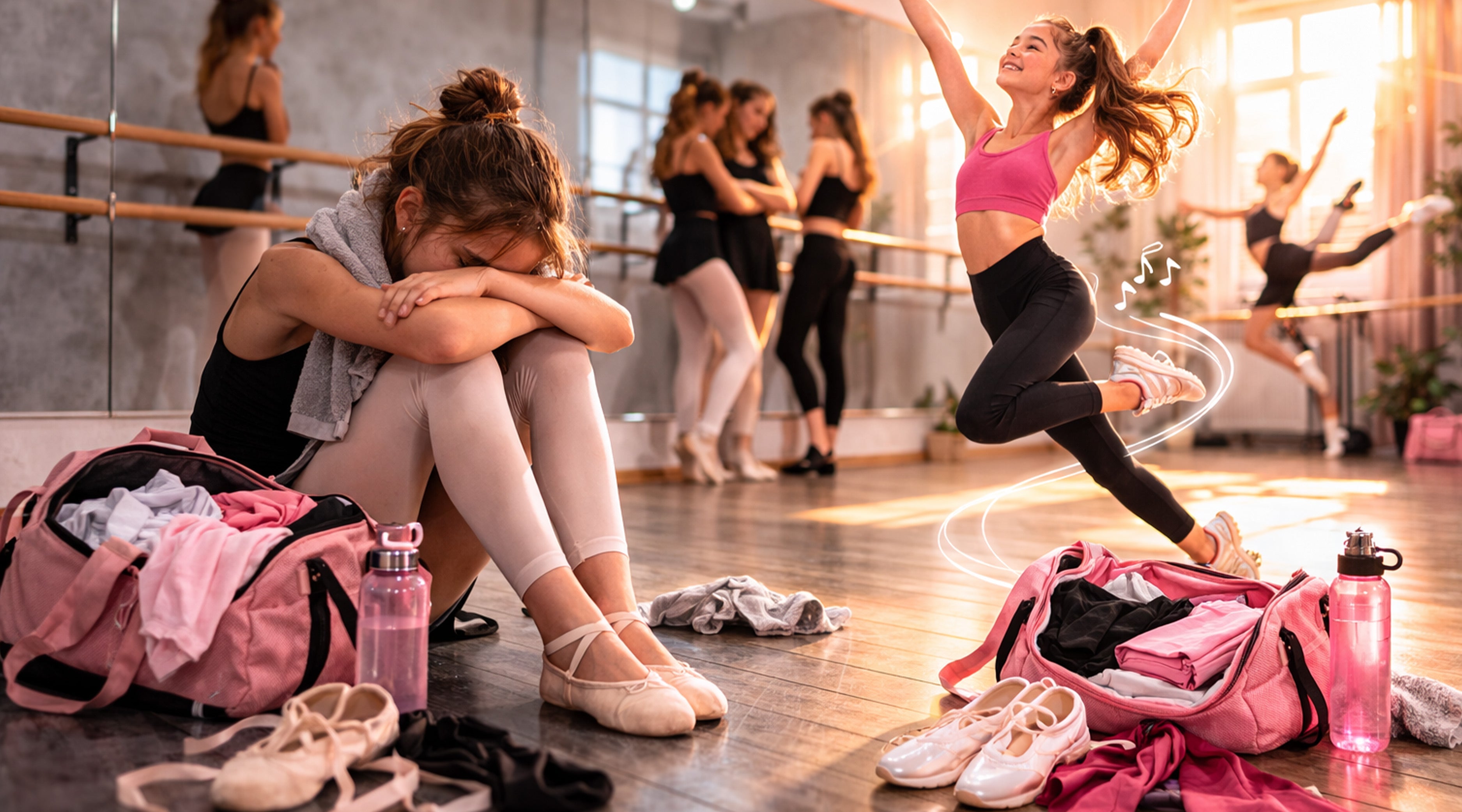
Introduction: When Passion Fades in the Studio
Dance begins with excitement. Young dancers enter studios with energy, curiosity, and dreams. They spin freely, jump fearlessly, and imagine themselves on stage. But for many, that initial excitement gradually fades. Classes become harder. Expectations increase. Confidence wavers. And eventually, some dancers stop showing up.
This phenomenon — dancers quitting — is more common than many parents and teachers realize. It is rarely caused by a single factor. Instead, it is often the result of a combination of emotional, physical, and environmental pressures.
Interestingly, one often-overlooked factor that plays a subtle yet meaningful role in motivation is what dancers wear. Dancewear impacts comfort, confidence, identity, and mindset. When dancers feel good in their clothing, they are more likely to feel prepared, focused, and committed.
In this article, we explore:
- The real reasons dancers quit
- The emotional journey behind burnout
- How confidence influences retention
- The surprising psychological role of dancewear
- Practical ways parents and teachers can support dancers
Understanding these elements helps create environments where dancers stay inspired — not overwhelmed.
1. The Reality Behind Dancer Dropout Rates
Dance is physically demanding and emotionally intense. As dancers progress, the commitment required increases significantly. Training hours grow longer. Competition becomes more serious. Expectations become clearer.
Many dancers quit not because they dislike dance, but because they struggle to manage the pressure associated with improvement.
Common phases when dancers quit include:
- Transition from beginner to intermediate level
- Early teenage years
- Post-competition seasons
- After experiencing performance setbacks
These stages often coincide with identity development and emotional growth, making them especially sensitive periods.
2. Emotional Burnout: The Silent Challenge in Dance
Emotional burnout occurs when dancers feel mentally exhausted or disconnected from their passion.
Signs of burnout include:
- Loss of enthusiasm for class
- Increased self-criticism
- Avoidance of practice
- Physical fatigue without clear cause
- Anxiety around performance
Burnout is not always visible. Many dancers continue attending classes while internally struggling.
When emotional exhaustion is not addressed, quitting may feel like the only relief.
3. The Role of Confidence in Long-Term Dance Motivation
Confidence plays a central role in whether dancers continue their journey.
Confident dancers:
- Take corrections constructively
- Recover from mistakes more easily
- Enjoy the process of improvement
Less confident dancers may:
- Fear judgment
- Compare themselves constantly
- Feel discouraged by slow progress
Confidence is shaped by many factors — teacher feedback, peer environment, body image perceptions, and personal experiences.
Dancewear, surprisingly, also contributes to this dynamic.
4. Body Image & Self-Perception in Dance Culture
Dance environments often emphasize alignment, posture, and physical aesthetics. While these elements are part of technique, they can unintentionally influence how dancers perceive their bodies.
Young dancers may become overly aware of:
- Body shape
- Muscle tone
- Physical differences from peers
When dancers feel uncomfortable in their bodies, they may also feel uncomfortable in their clothing. This discomfort can create mental barriers to participation.
Supportive environments and thoughtfully designed dancewear can help reduce these pressures.
5. How Physical Discomfort Impacts Motivation
Physical discomfort is a major but under-discussed reason dancers lose enthusiasm.
Examples include:
- Tight waistbands causing distraction
- Fabrics that trap heat
- Garments that shift during movement
- Poorly fitted dance shoes
Even minor discomfort, when repeated over time, can make classes feel exhausting rather than energizing.
Comfort allows dancers to focus on movement instead of adjusting their clothing.
6. The Psychological Impact of Dancewear
Clothing influences mindset. In sports psychology, this concept is known as enclothed cognition — the idea that what we wear affects how we think and perform.
For dancers, wearing well-designed dancewear can:
- Increase sense of readiness
- Enhance body awareness
- Reduce self-consciousness
- Create performance rituals
When dancers feel secure in their clothing, they can focus more on artistic expression.
7. Identity Formation in Teenage Dancers
Teenage years are a time of identity exploration. Dance can either support this process or complicate it.
Dancewear choices play a role in:
- Self-expression
- Personal style
- Confidence in social environments
Brands that balance performance and aesthetic appeal help dancers feel aligned with their identity — not restricted by uniformity.
8. The Pressure of Comparison in Studio Environments
Comparison is inevitable in group training environments.
Social media amplifies this challenge. Dancers constantly see:
- Competition highlights
- Advanced choreography
- Idealized body standards
When dancers compare themselves negatively, motivation declines.
Supportive dancewear that fits well and feels empowering can help mitigate comparison anxiety.
9. The Role of Parents & Teachers in Retention
Parents and teachers influence whether dancers stay motivated.
Helpful approaches include:
- Celebrating effort rather than perfection
- Encouraging rest and balance
- Listening to emotional cues
- Creating realistic expectations
Providing dancers with comfortable, appropriate clothing is a practical yet meaningful form of support.
10. Building Positive Rituals Around Dance Preparation
Preparation rituals enhance commitment.
Examples include:
- Packing a dance bag the night before
- Choosing an outfit intentionally
- Listening to music before class
These small actions create mental transitions into “dance mode,” reinforcing consistency.
11. Preventing Burnout Through Environment & Lifestyle
Preventing dancer dropout requires holistic awareness.
Key strategies:
- Balanced schedules
- Supportive peer relationships
- Open communication
- Proper nutrition and rest
Dancewear becomes part of this ecosystem — contributing to physical ease and psychological readiness.
12. How the Right Dancewear Encourages Long-Term Commitment
High-quality dancewear supports:
- Physical comfort
- Emotional confidence
- Consistent performance
When dancers associate comfort and confidence with training, they are more likely to continue.
At Glam Groove, we curate dancewear designed to support dancers’ journeys — not just their appearance.
Final Thoughts: Keeping the Passion Alive
Dance is a journey filled with growth, challenges, and transformation. When dancers feel supported emotionally, physically, and psychologically, they are more likely to stay connected to their passion.
Motivation is not sustained by talent alone — it is nurtured by environment, mindset, and comfort.
✨ Explore thoughtfully curated dancewear at Glam-Groove.com
Designed for movement. Created for confidence.


