

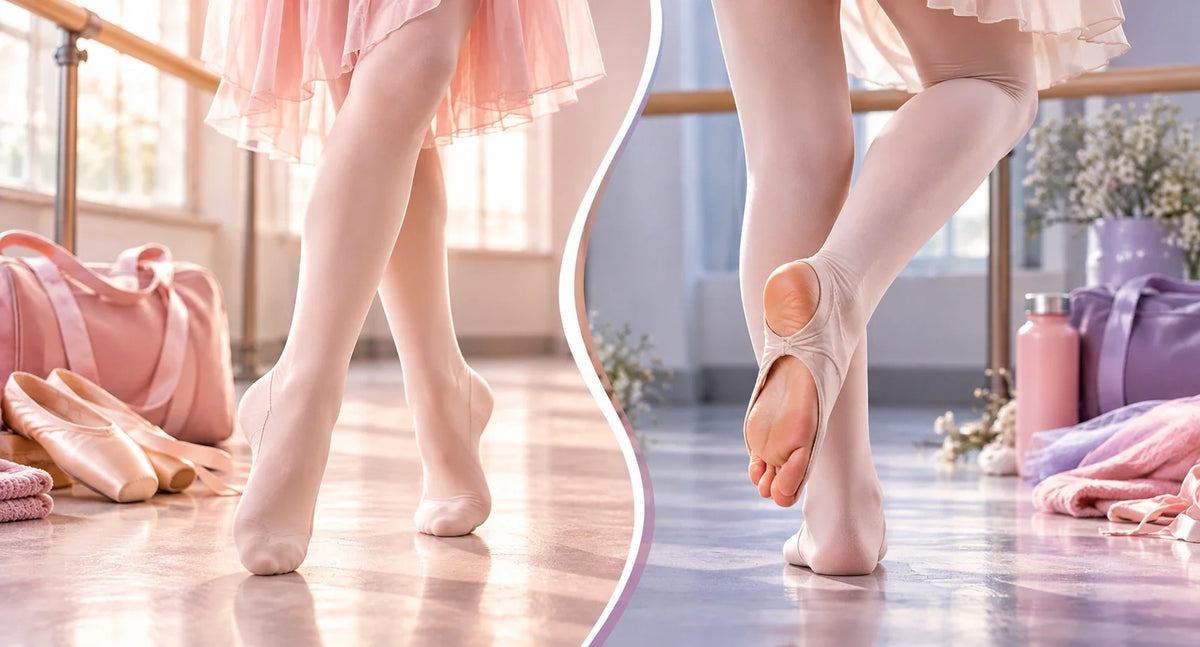
Choosing the right ballet tights is an important part of preparing for dance classes, rehearsals, and performances. Ballet tights come in different styles, with footed and convertible tights being two popular options for dancers of different ages and experience levels.
Although both styles provide coverage for the legs, they differ in design, versatility, and how dancers use them during training. Understanding these differences can help you choose the right option for your ballet routine.
Whether you are a beginner, an experienced ballet dancer, or a parent shopping for dance essentials, this guide explains the differences between convertible and footed ballet tights, their benefits, and what to consider before purchasing.
What Are Footed Ballet Tights?
Footed ballet tights are designed with a closed foot section that covers the entire foot, similar to conventional hosiery. They are commonly worn for ballet classes, rehearsals, and performances.
These tights create a continuous appearance from the waist to the toes, making them a traditional choice for many ballet outfits.
Benefits of Footed Ballet Tights
1. Full coverage
Footed tights cover the legs and feet, creating a consistent look that works well with traditional ballet attire.
2. Simple and convenient design
There is no opening to adjust around the foot. Dancers can put them on like regular tights and wear them with suitable ballet slippers.
3. Suitable for traditional ballet outfits
Footed tights are frequently used with leotards, skirts, and other conventional ballet clothing.
4. A streamlined appearance
The continuous fabric can create a neat, uniform appearance for classes, rehearsals, and stage performances.
Who Should Choose Footed Ballet Tights?
Footed ballet tights can be a practical option for dancers who prefer complete foot coverage and a traditional ballet look.
They may suit beginners, children, and experienced dancers, provided the style meets their instructor's dress-code requirements.
When putting together a ballet outfit, you can explore ballet dance essentials to find dancewear options that complement your tights.
What Are Convertible Ballet Tights?
Convertible ballet tights are designed with a small opening, usually underneath the foot. This opening allows dancers to pull the foot section back when needed, converting the tights into a footless style without removing the entire garment.
This design provides greater flexibility for dancers who alternate between activities that require covered feet and those that require direct access to the toes.
Benefits of Convertible Ballet Tights
1. Versatile wear
The opening allows dancers to move the foot section aside when they need access to their feet, then return the tights to their original position.
2. Convenient foot access
Dancers may find convertible tights useful when adjusting toe pads, inspecting their feet, or making footwear adjustments during rehearsals.
3. Useful for multiple dance activities
Some dancers participate in ballet alongside other techniques that require footless tights. Convertible tights can make changing between these requirements more convenient.
4. Practical for certain pointe-work routines
Dancers who wear pointe shoes may appreciate the ability to access their feet without completely removing their tights. However, the suitability of a particular style depends on the dancer's needs and instructor's recommendations.
Who Should Choose Convertible Ballet Tights?
Convertible tights may suit dancers who need occasional access to their feet or regularly change between footwear and movement requirements.
They can also be useful for dancers who participate in multiple classes. However, beginners should check whether their studio requires footed or convertible tights before purchasing.
Convertible vs Footed Ballet Tights: Key Differences
Both styles are designed for dance, but their construction makes them suitable for slightly different preferences and routines.
|
Feature |
Footed Ballet Tights |
Convertible Ballet Tights |
|
Foot design |
Fully enclosed foot |
Opening beneath the foot |
|
Foot access |
Requires removing or changing the tights to expose feet |
Foot section can be pulled back |
|
Coverage |
Continuous coverage over the feet |
Full coverage when worn normally |
|
Versatility |
Best for routines requiring consistent foot coverage |
Useful when access to the feet is needed |
|
Convenience |
Simple, straightforward design |
Offers more flexibility for adjustments |
|
Best suited for |
Traditional ballet outfits and classes |
Dancers who need adaptable foot coverage |
Neither style is automatically better for every dancer. The right choice depends on your dance routine, comfort preferences, and studio requirements.
1. Which Ballet Tights Are Best for Beginners?
For beginners, footed ballet tights are often a straightforward starting point because they provide full coverage and work well with traditional ballet outfits.
However, some studios may recommend convertible tights, particularly if dancers need to access their feet during class or participate in different types of training.
Before buying your first pair, ask your instructor about the required colour, thickness, and style.
Parents shopping for young dancers should also consider how easily the tights can be put on and removed. A comfortable fit and durable construction are important for regular classes.
2. Which Ballet Tights Are Better for Pointe Work?
Pointe work requires specialised footwear and appropriate training under qualified instruction. The choice between footed and convertible tights depends on the dancer's established routine and studio preferences.
Convertible tights can be convenient when dancers need access to their feet to adjust toe pads or inspect their skin. Footed tights may remain suitable when consistent coverage is preferred.
The tights themselves do not make pointe work safer. Correctly fitted pointe shoes, appropriate training, and guidance from a qualified ballet teacher are essential.
Choose the style that accommodates your existing pointe-work routine rather than assuming one type is universally superior.
3. How to Choose the Right Ballet Tights Size
The correct size can make a noticeable difference to comfort and appearance. Tights that are too small may feel restrictive, while oversized tights can bunch around the ankles or waist.
Keep these points in mind when choosing ballet tights:
- Check the size chart: Follow the manufacturer's height and weight recommendations where provided.
- Consider stretch: Different materials have different levels of elasticity.
- Look for a comfortable waistband: It should stay in place without digging into the skin.
- Check the foot fit: Footed tights should cover the feet without pulling excessively at the toes.
- Inspect the convertible opening: For convertible tights, the opening should allow practical access without making the tights uncomfortable.
- Follow studio requirements: Some ballet schools specify particular tights styles and colours.
If you are purchasing dancewear online, review the dancewear size guide before placing your order. Remember that apparel sizing guidance does not replace any separate product-specific instructions.
4. What Materials Should You Look For?
Ballet tights are commonly made from synthetic fibres such as nylon and elastane or spandex. These materials provide stretch and help the tights fit closely to the body.
When comparing different options, consider the following factors.
Stretch and Flexibility
Stretch fabrics help tights accommodate movements such as pliés, tendus, extensions, and other ballet exercises.
Comfort and Softness
Dancers may wear tights for extended periods during rehearsals and performances. A comfortable fabric can make regular practice more pleasant.
Durability
Frequent dressing, stretching, and washing can affect tights over time. Follow the manufacturer's care instructions to help maintain their condition.
Opacity and Colour
Some tights are more opaque than others. Select a colour and finish that match your ballet outfit and studio requirements.
For regular training, choose tights that balance comfort, stretch, and durability rather than focusing on appearance alone.
5. How to Style Ballet Tights for Classes and Performances
Both footed and convertible ballet tights can complement different ballet outfits, depending on the class dress code.
Ballet Classes
Footed tights are a traditional choice when worn with a leotard and ballet slippers. Convertible tights can offer additional flexibility when dancers need access to their feet.
Rehearsals
Choose a style that remains comfortable during repeated movement. If your rehearsal involves multiple footwear changes, convertible tights may be convenient.
Stage Performances
Performance requirements often determine the preferred tights style, colour, and finish. Follow the costume instructions provided by your dance school or choreographer.
You can explore the dance clothing collection for apparel options to coordinate with your ballet outfit, subject to the available product range.
6. How to Care for Ballet Tights
Ballet tights can develop snags, runs, or loss of elasticity with repeated use. Proper care can help extend their useful life.
- Follow the care label before washing.
- Consider using a laundry bag to reduce snagging.
- Keep tights away from rough surfaces and sharp objects.
- Avoid excessive heat if the manufacturer advises against it.
- Allow tights to dry according to the care instructions.
- Check for holes, damaged seams, and stretched waistbands before class.
Handle the convertible opening carefully when putting on or removing the tights. Pulling too hard on the fabric can cause damage.
Keep a spare pair in your dance bag for rehearsals and performances when possible.
7. Common Mistakes to Avoid When Buying Ballet Tights
Avoid these common mistakes when selecting ballet tights.
Ignoring your studio's dress code: A particular style or colour may be required for classes and performances.
Choosing the wrong size: Poorly fitting tights can bunch, slip, or feel restrictive during movement.
Assuming convertible tights are always better: The opening is useful for some routines, but not every dancer needs it.
Buying based on appearance alone: Fabric quality, stretch, fit, and comfort are equally important.
Ignoring care instructions: Incorrect washing or drying can damage delicate fabrics and reduce elasticity.
Forgetting to check product details: Review the material, size information, and product description before ordering.
Conclusion
Convertible and footed ballet tights both have practical benefits, but the best option depends on your dance routine and personal preferences.
Footed ballet tights are a straightforward choice for dancers who prefer continuous foot coverage and a traditional ballet look. Convertible ballet tights offer additional flexibility for dancers who need occasional access to their feet or participate in different types of training.
Before choosing, consider your studio's requirements, sizing, fabric comfort, and the activities you perform most often.
Explore dancewear essentials at Glam Groove to discover available products for your practice wardrobe. If you need help with an order or product information, you can contact the Glam Groove team.
Choosing the right tights can help you feel prepared, comfortable, and confident in every class and rehearsal.
Frequently Asked Questions
1. What is the main difference between convertible and footed ballet tights?
Footed ballet tights fully cover the feet, while convertible tights have an opening beneath the foot that allows the foot section to be pulled back when access is needed.
2. Are convertible ballet tights better than footed tights?
Not necessarily. Convertible tights offer greater flexibility for accessing the feet, while footed tights provide simple, continuous coverage. Your studio requirements and personal needs should guide your choice.
3. Can beginners wear convertible ballet tights?
Yes, beginners can wear convertible tights if their instructor or studio permits them. Check the dress code before purchasing.
4. Are convertible tights useful for pointe shoes?
They can be convenient for dancers who need access to their feet to adjust toe pads or inspect their skin. The appropriate choice depends on the dancer's routine and instructor's guidance.
5. How often should ballet tights be replaced?
Replace them when they develop significant holes, runs, damaged seams, or loss of elasticity that affects their fit and appearance.


